
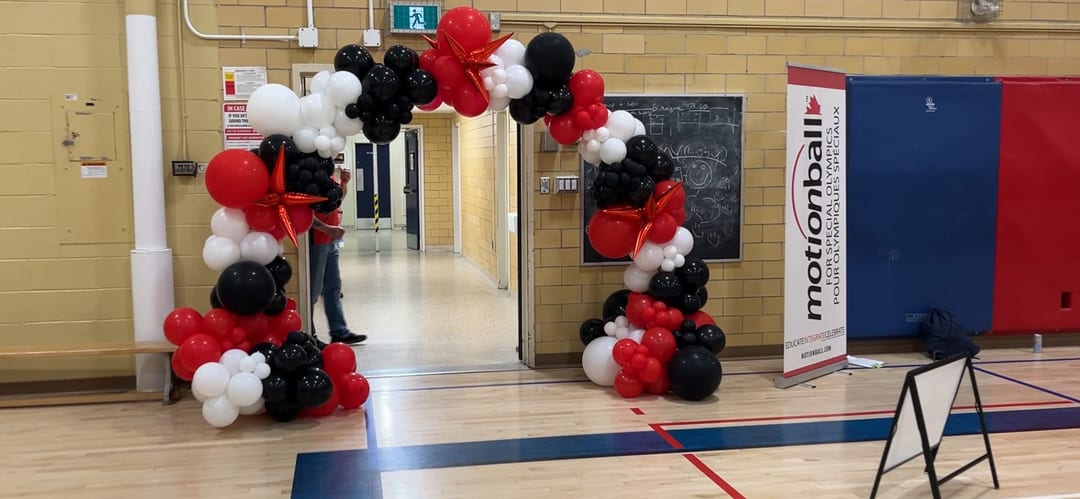
London hosts the fun of Motionball and reaps the benefits of the movement
Motionball came to London on Nov. 7.
In case you’re worried you missed the arrival of a new sport somewhere along the line, don’t be. You haven’t.
Motionball is something much bigger than a single sport. In its 25 years, it has raised more than $23 million for the Special Olympics movement in Canada.
Paul Etherington is Motionball’s co-founder and chair. The organization now runs more than 50 events a year on 30 university campuses and in 20 cities, and London is now on that map.
“Our mission is to introduce Canadian young professionals and university students to Special Olympics,” Etherington says. “The day is a day of sport and integration. Every team is made up of males and females, and we add one celebrity Special Olympics athlete to each team.”
The London event at Oakridge Secondary School was a Marathon of Sport, the format used for about 90 per cent of Motionball’s 50 annual events. It featured soccer, ultimate frisbee, benchball, basketball and giant pong.
“We’ve got some incredible volunteers who are from London who do this,” Etherington said. “Motionball is built from volunteers from the top down. At this event in particular, every team has to raise a certain amount of dollars through online pledging.”
Justin Mulligan is the event director in London and has been friends with Etherington for years.
“Paul [told me] it’s time for you to open up the London chapter,” Mulligan said with a laugh. “We have about 120 participants, about 20 volunteers and, most importantly, about 24 Special Olympics athletes.”
The day also featured incredible dedication.
“One of our athletes was in the hospital as of this morning, and made his dad bring him here,” Mulligan said. “He still has the IV [PICC] in, but there was no way he was missing this event. I asked if I could tell that story, because it’s amazing.”
Special Olympics has grown to more than 40,000 active athletes in Canada, and the numbers show its impact goes well beyond the games themselves.
Special Olympics Canada reports a 44 per cent employment rate for participating athletes. For non-participating individuals with intellectual disabilities, that number is 28 per cent.
The drop in health risks also leaps off the screen. Special Olympics Canada measures depression risk 49 per cent lower, and diabetes risk 15 per cent lower, among its athletes.
Motionball is helping the next wave of athletes and volunteers keep the work going.
“It can be a hard event to conceptualize when you tell someone about it,” Mulligan admits. “But usually, if I can get you here, you’re hooked. There’s a lot of repeat people, and then hopefully we have those people put together their own teams next year, and it just kind of spirals from there.”
More information about Motionball can be found at motionball.com.