
“It’s rather addictive”: Seven London-area women return from Triathlon Worlds
The London area is home to high-level athletes. Pick a sport… any sport. Pick more than one, even. Damian Warner makes London his home, and he’s one of the greatest decathletes ever, excelling across 10 different events.
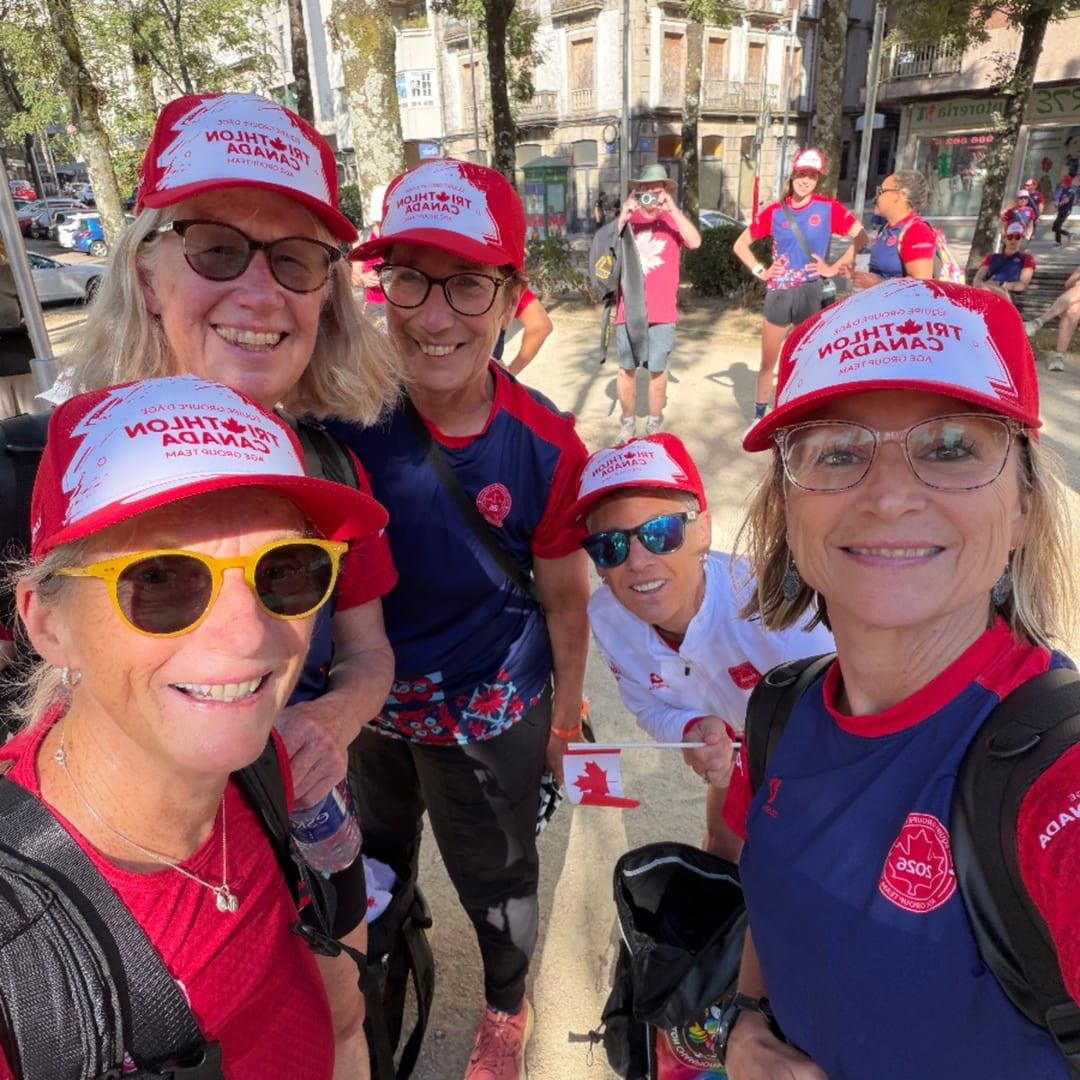
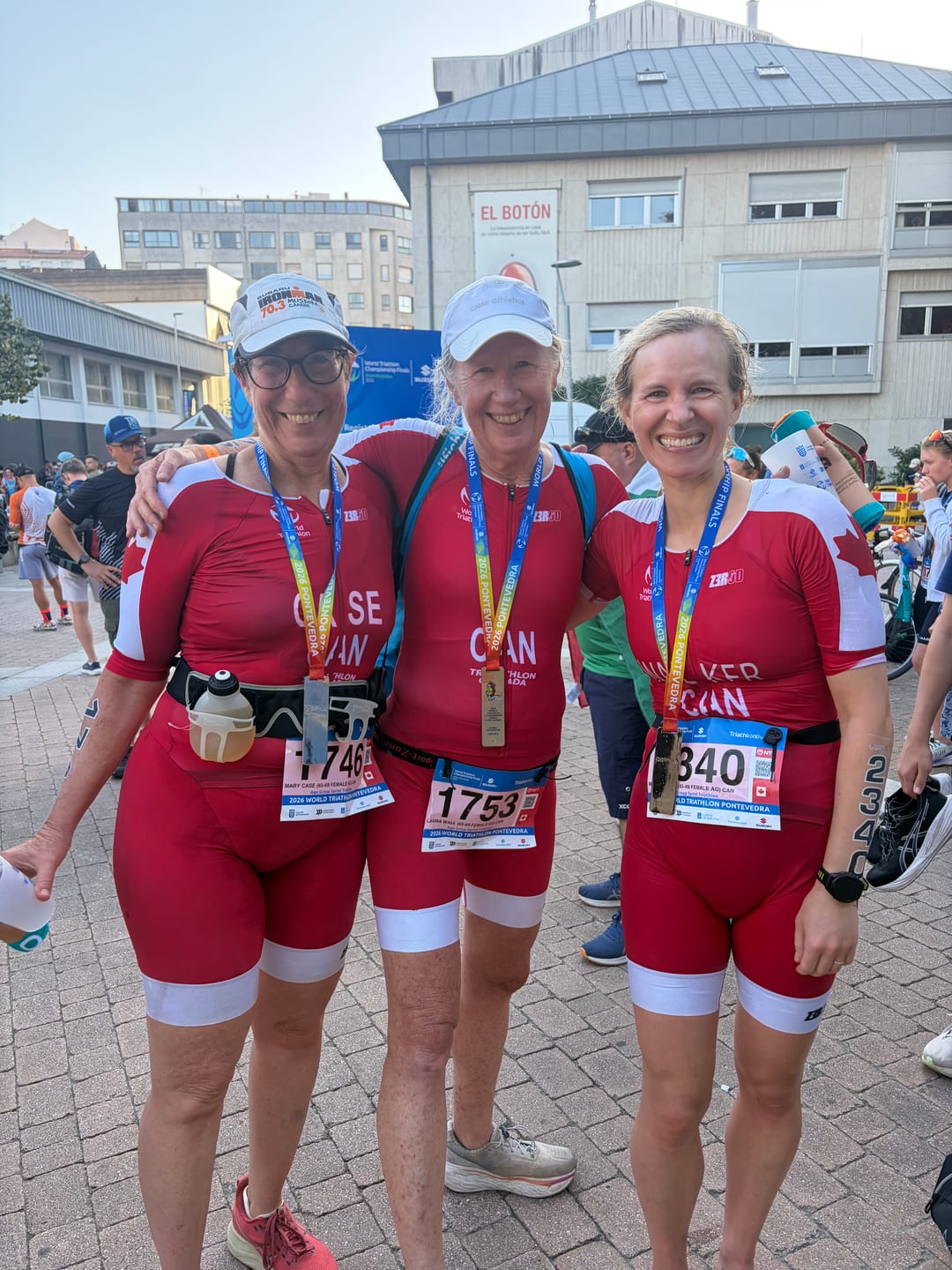
This fall, Mary Case, Christine Dorey, Mary-Elizabeth Jones, Janet Thompson, Janet Tufts, Meg Walker and Laura Wall put London on the triathlon map. All seven qualified for and competed in the 2026 World Triathlon Age-Group Championships in Pontevedra, Spain.
An eighth, Amanda Switzer, had also qualified, but an injury right before the competition kept her from making the trip.
Thompson and Wall didn’t just finish. They reached the podium.
Thompson, who is from Woodstock, was second in the 75-79 sprint competition.
“She is a phenom,” said teammate Janet Tufts. “[Thompson] did the sprint distance on Thursday, she did the Olympic distance on Saturday and she did the mixed team relay on Sunday.”
Wall and her team finished third in the mixed relay’s 280 age group, where the members’ ages must add up to 280.
Tufts said having such a strong local contingent made the event extra special. Watching Wall step onto the podium is something she’ll always remember.
“It was her first time on the podium and she’s been going year after year. What a moment for her, because you’ve got a team behind you to celebrate and to support.”
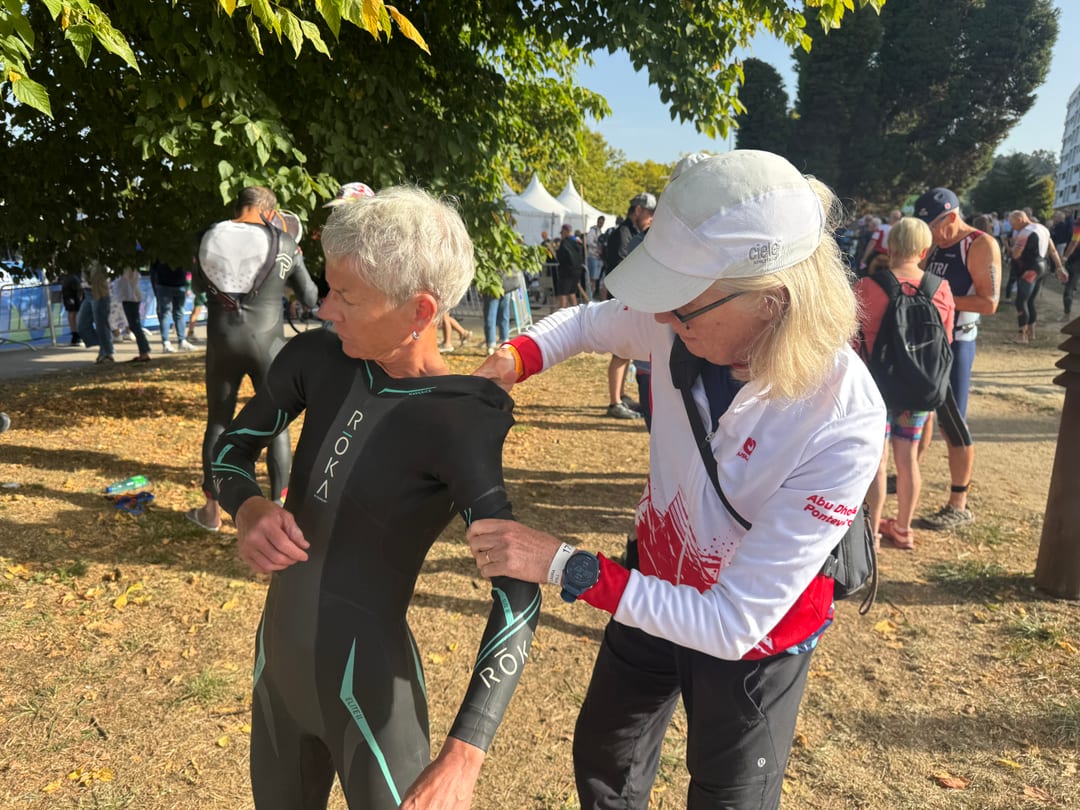
That support showed up in plenty of ways once competition began on Sept. 23.
Racing in a world-class triathlon can sound daunting enough. Anyone who has travelled, though, knows there’s always something you didn’t plan for.
Pontevedra has a population of just under 84,000, roughly the size of Sarnia or Sault Ste. Marie. It hosted almost 4,000 competitors from 62 countries, and Canada led the way with 436.
Add the friends and family who came to watch, and it took a lot of creativity to sort out transportation and accommodations.
Most athletes raced a 750-metre swim, a 20-kilometre bike and a five-kilometre run, so eating enough was a necessity. That turned into its own challenge, since many restaurants in the area keep limited daytime hours.
And that doesn’t account for getting there.
Outside of a good pair of running shoes and a comfortable swimsuit, the key piece of triathlon gear is a racing bike. Racing bikes do not fit well in an overhead bin.
So competitors become bike mechanics.
“The bike goes into oversized luggage,” explained Tufts. “You take your bike apart and you put it in this bike bag and protect it as best as you can with bubble wrap.”
Then you hope it arrives in one piece so you can put it back together.
All the bikes made it.
Tufts nearly missed the trip herself, all because of a wildlife run-in at Springbank Park.
“I was just about at Storybook Gardens,” recalled Tufts. “And I could see a raccoon on the path. I slowed down and it cleared the path. It was heading toward some picnickers and [was startled by something] and it did a 180 and came back and slammed into me and my bike. It scampered off unscathed. I was left on the path with a broken collarbone.”
She had surgery a week later.
“The surgeon said, your recovery is going to have to go perfectly for you to make it to Spain,” said Tufts. “And I would say it went perfectly.”
Tufts gave special mention to teammates who handle all the training while balancing work and family.
“One of our teammates has four kids and a demanding job. I raised three kids and I could not imagine doing this when they were younger. I can’t.”
So what keeps them coming back to the early-morning wake-ups, the long swims, the long rides and the long runs?
“I have to confess it’s rather addictive,” laughed Tufts. “Once you get into it there’s something inside that drives us all.”